Arts & Culture
·
Story
New Zealand
The Country That Found the Shire
An imagined geography found a real one. On Hobbit Day, Zealanding reflects on how Middle-earth became attached to the landscapes of New Zealand.
Zealanding Editorial Team

The rolling countryside of Matamata, Waikato, where fiction and landscape would eventually meet. Photo: JinHui CHEN / Unsplash.
Every 22 September, readers of J. R. R. Tolkien celebrate the birthday of two characters who never existed and yet somehow came to possess biographies, homes and memories of their own. Bilbo and Frodo Baggins were both born on this day in Tolkien’s imagined calendar.
Today is International Hobbit Day.
There is something especially curious about celebrating it in New Zealand.
Tolkien did not need this country to imagine Middle-earth. Its hills, forests, languages and roads existed long before a camera arrived here. His world grew out of literature, mythology, language and landscapes deeply connected to Europe, especially England.
New Zealand came later.
And yet something happened when the books became films. An imagined geography found a real one.
In 1998, while searching for a place that could become the Shire, Peter Jackson’s location team spotted a farm near Matamata from the air. There were rolling green hills, a lake, an old pine tree and almost no visible signs of modern life.
It was not the Shire, of course. The Shire existed only in words.
But it looked as though it might remember it.
More than two decades later, the boundary between those two places is no longer so easy to draw. For millions of people, Middle-earth now has the shape of New Zealand. Mountains, rivers, valleys, farms and forests became part of a geography that readers had once been required to build privately, inside their own imaginations.
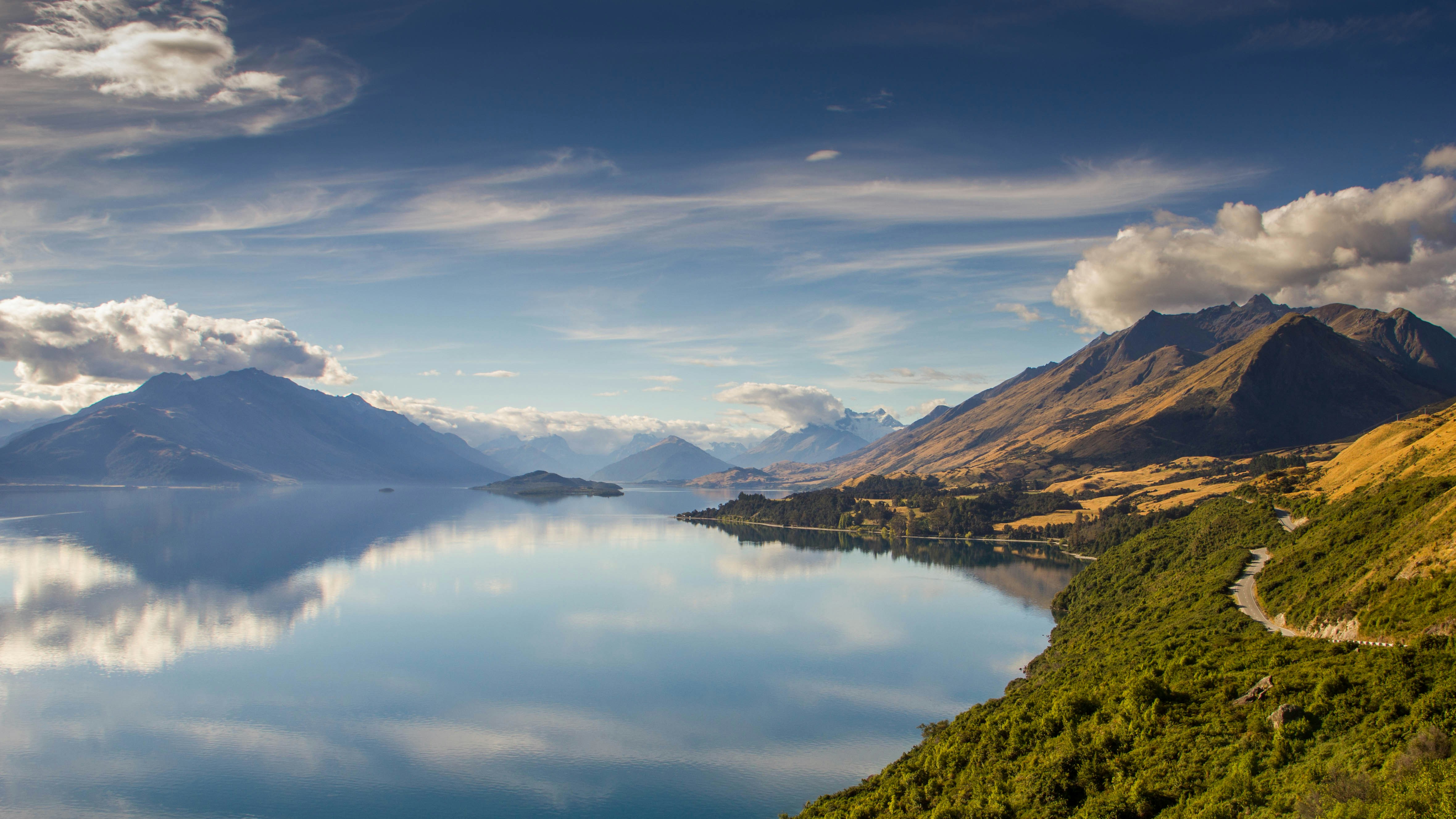
The road to Paradise near Glenorchy. The Southern Lakes became another part of the real geography audiences came to recognise as Middle-earth. Photo: Andreas Sjövall / Unsplash.
Perhaps that is one of literature’s strangest powers.
A writer imagines a place. A reader reconstructs it. Years later, someone finds a real landscape that somehow resembles both.
Today, at Hobbiton in Waikato, people from different parts of the world celebrate Bilbo and Frodo’s birthdays. There is food, music, costumes and the glow of small round windows after dark. It would be easy to see all of this simply as part of the enormous tourism industry left behind by the films.
But there is another way to look at it.
Thousands of kilometres from the places that first fed Tolkien’s imagination, a farm in New Zealand became a meeting point between fiction and the physical world.
That, too, says something about stories.
Stories rarely remain where they were written.
They travel between languages and generations. They cross oceans. They are translated, adapted, misunderstood and rediscovered. Sometimes they even attach themselves to landscapes their authors never imagined.
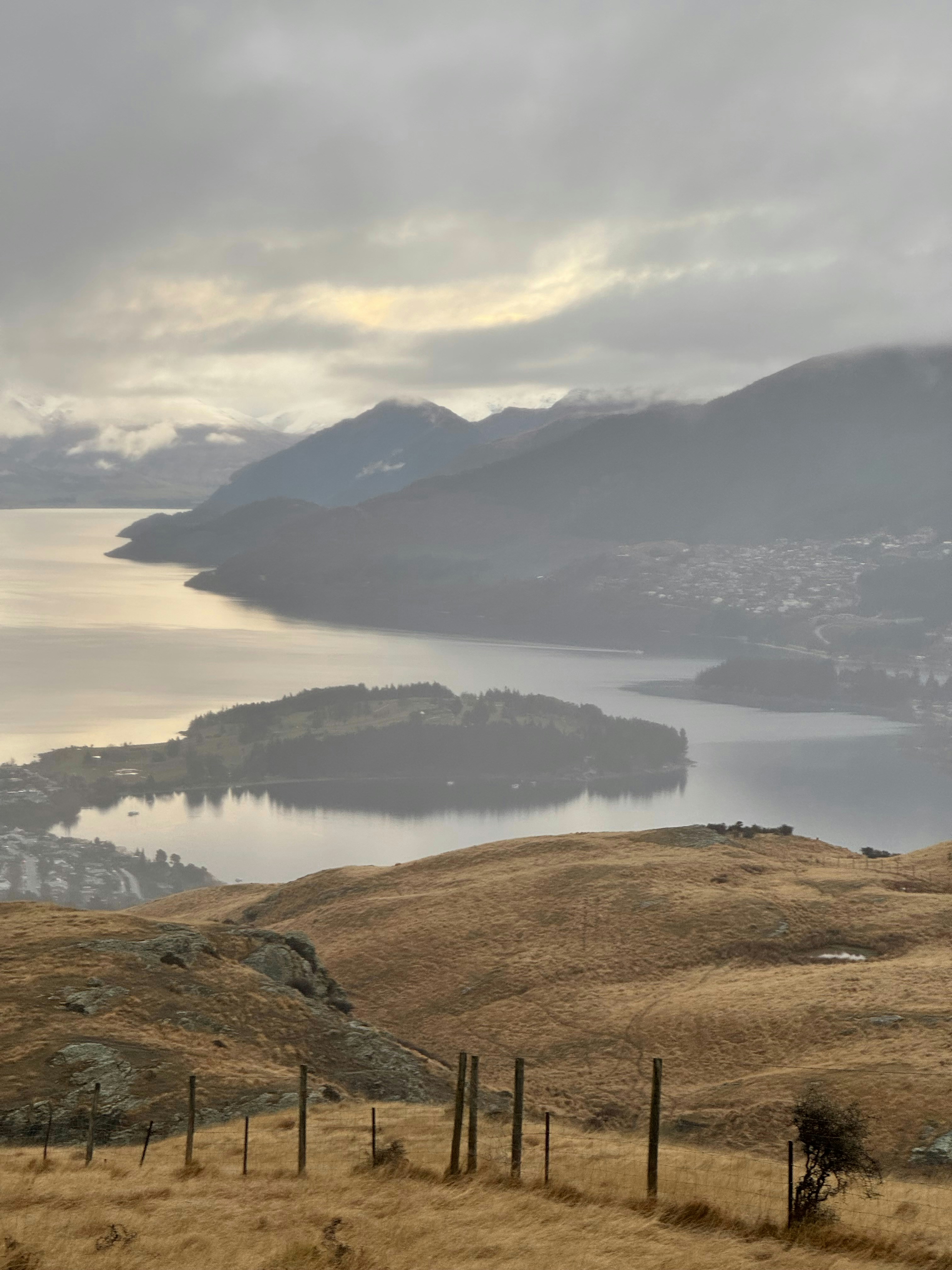
Deer Park Heights above Queenstown, one of the Southern Lakes locations used in The Lord of the Rings trilogy. Photo: Junyu Wei / Unsplash.
And when that happens, the landscape changes too.
A hill is still a hill. A path is still a path. A mountain is still stone and snow. But once a story has passed through them, we do not necessarily look at them in the same way again.
Perhaps that is why the relationship between Tolkien and New Zealand has survived far beyond the films.
It is not simply that New Zealand was able to look like Middle-earth.
It is that Middle-earth gave millions of people another way of looking at New Zealand.
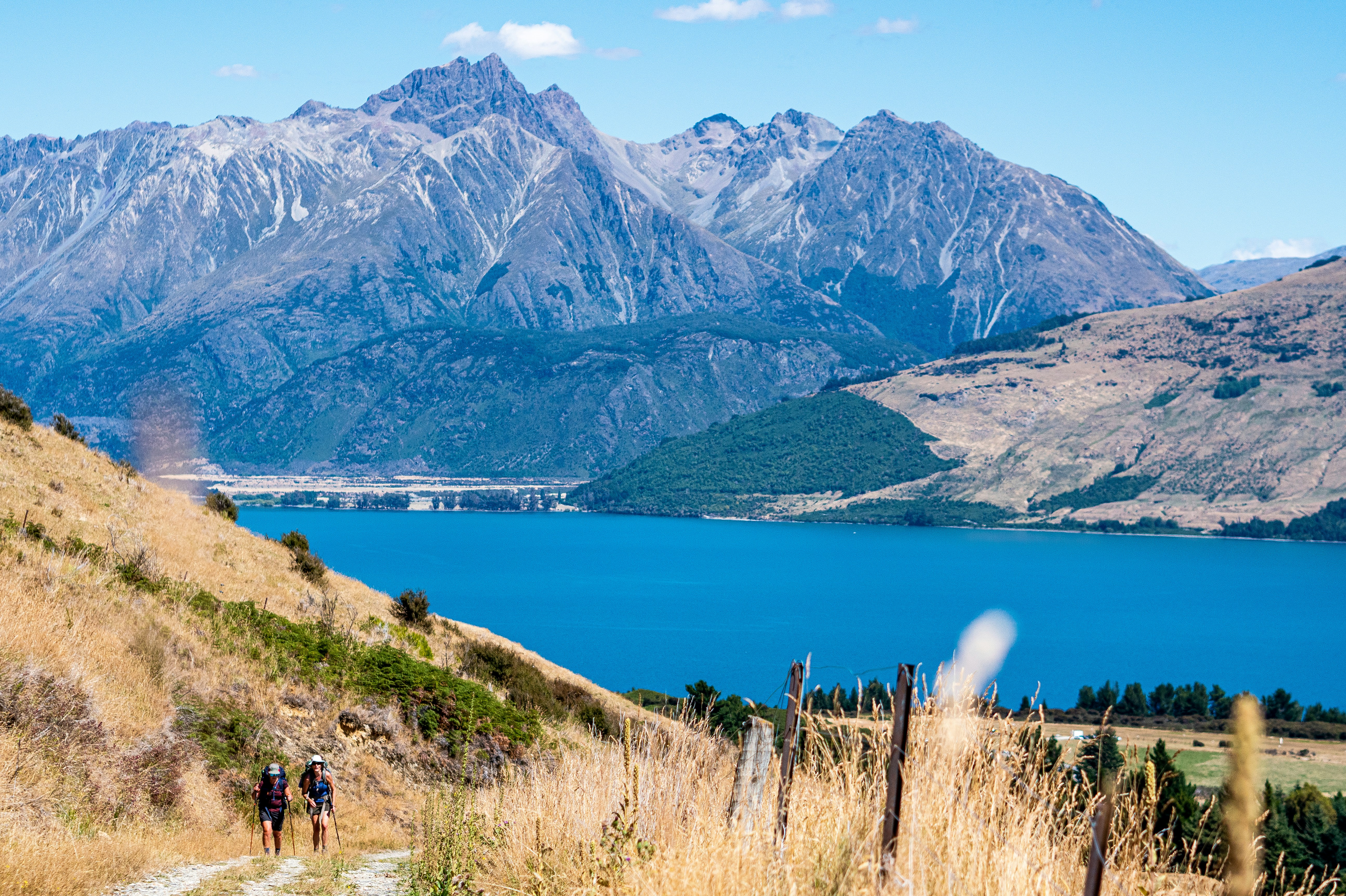
Glenorchy, at the northern end of Lake Wakatipu. Here, landscape and storytelling have become difficult to separate in the imagination of millions of visitors. Photo: Tonia Kraakman / Unsplash.
Today, on the birthday of two imaginary hobbits, somewhere near Matamata, a small round door will glow against a green hill.
The door leads nowhere.
And somehow, it has taken millions of people very far.
Keep the conversation going
This story doesn’t end here.
Read something that stayed with you? Join the discussion, meet the writer behind the story, or help make the next one possible.
Join the discussion on Facebook

Zealanding Editorial Team
Zealanding is an independent editorial platform exploring the culture, society, food, travel and stories shaping New Zealand today.
Buy the team a coffee
Tag Zealanding on Instagram
A NOTE FROM THE EDITORS
Send Zealanding a local story lead, contact, photograph, idea or tip. The best stories often begin with a quiet nudge.