Arts & Culture
·
Story
Queenstown, New Zealand
A Lawyer in the Kitchen: César Carvajal’s The Older Brother
Santiago Bonhomme reads César Carvajal’s memoir as a story not simply about migration, but about what remains of us when careers, countries and identities change.
Santiago Bonhomme

The Older Brother: A Memoir of Migration, Reinvention, and Freedom, photographed in Queenstown, where much of César Carvajal’s story continues to unfold. Photo: Zealanding.
I met César while we were cooking at a restaurant in Queenstown. He was methodical, careful about his work, and to me he was simply a good cook. It was only when I learned something of his previous life that I began to understand where that way of working came from. He had a solid academic background and a mind that never seemed short of questions. As we worked, we talked about life, culture, what we had left behind and what was happening to us in New Zealand. The conversation came easily. We became friends.
That friendship continued to grow. Today we make the podcast Fuera de página together and founded Zealanding.com, a digital publication about culture and society. Somewhere along the way, César gave me a copy of The Older Brother, his first book, published in 2026 by The Older Brother Press, the imprint he established in Queenstown. It runs to almost four hundred pages. I opened it expecting the story of a man who had left one country to begin again in another. What I found was less straightforward, and more interesting.
César was born in Bogotá in 1985. He studied law and worked in the public sector, first on environmental and land matters, then in infrastructure. At twenty-nine he became general secretary of a company responsible for a major highway concession. In July 2018 he was dismissed. He remembers loosening his red tie as he listened to the decision, then gathering his belongings into a box and walking out of the building. When he reached his car, he smiled. He had already been planning a move to New Zealand. Losing the job brought the departure forward.

Bogotá, the city where César Carvajal’s professional life began before migration reshaped it. Photo: Mariana Boscan Fernandez / Unsplash.
He arrived that same year and began washing dishes in an Auckland restaurant while studying English. There followed a cookery diploma, business studies, work on vessels in Fiordland and, eventually, Queenstown. These days he drives for Uber, facilitates meditation sessions and, more recently, has also been working as a gardener. It is difficult to find a single occupation that contains him. Each seems to have offered another way of being in the world.
The Older Brother is a memoir, though it moves at times towards the personal essay and the literature of self-development. Carvajal remembers with an eye for detail, from the houses of his Bogotá childhood to the kitchens and landscapes of New Zealand. The events matter, but so do the questions they leave behind. In the second half, meditation and the effort to live more consciously come to the fore. The pace changes. The book grows more reflective, as though telling us what happened were no longer enough: the writer also wants to know what it has meant.
In The Situation and the Story, the American writer Vivian Gornick makes a distinction between the circumstances of a life and the story a writer discovers in telling them. I thought about that distinction as I read César’s book. To have been a lawyer, an executive, a dishwasher and a cook is one thing. To ask what has survived of yourself through all those lives is quite another.
Carvajal does not arrange his past as a neat ascent towards success. In the prologue, making Colombian coffee and looking out over Lake Wakatipu, he catches his reflection in the kitchen window. In it he sees the executive, the migrant, the dishwasher and the chef. The longer he worked on the book, the less separate those men seemed. There is something familiar in that for anyone who has emigrated. You begin to see how much of the person you thought you were depended on a particular place, a job, or the people who knew you there.

Lake Wakatipu and the Remarkables, Queenstown — the landscape from which The Older Brother begins looking back. Photo: Unsplash.
One small detail says a great deal about those early years. At the Auckland pizzeria, from the room where he changed before a shift, he could see an advertisement on the back wall of a shopping centre. It carried a single word in large blue capitals: FREEDOM. He never found out what it was advertising. He saw it each afternoon, with English lessons and unfinished assignments still on his mind, before putting on his chef’s jacket. It is a modest scene, but it stays with you: a man who had left an important position behind, trying to work out what freedom might actually mean.
The title finds one of its most intimate meanings in César’s relationship with his younger brother, Sebastián, who lives in Montreal. César writes about being unable to attend Sebastián’s wedding because he could not afford the journey. Later, the brothers made a podcast called Hermanos en la Distancia, finding a way back to conversations that years and countries had made infrequent. Being the older brother, César comes to understand, is not a question of standing above someone. It is a question of how you stand beside them. Sebastián is no disciple. At times he has the knowledge, the money or the clearer judgement that César needs, and César says so. Not every memoir of this kind is so willing to admit that the person offering advice has things to learn as well.
Reading it, I understood more of the order and precision I used to notice in the kitchen. It was not only a matter of learning a trade. Something of the lawyer remains in the writing itself. Carvajal observes, sorts, reconstructs; he wants to account for each step. That attention allows him to hold on to scenes another narrator might have passed over. The lawyer brought his respect for systems and responsibility into the kitchen. The dishwasher taught the executive humility. The César I knew from our conversations at work was there on the page.
Throughout the book, he gives himself room to linger over memories, reading and experiences that have changed the way he understands his life. He wants to make sense of what happened, but he is also willing to leave some things unresolved. He does not write as a man who has found every answer. He admits, for instance, that recognising his habit of working too hard and sleeping too little does not prevent him from falling into it again. That contradiction makes the book more human to me. We all know something we ought to change, and go on doing it anyway.

Lake Hayes, near Queenstown. The memoir ends on a night when the road ahead can only be seen a little at a time. Photo: Andrew Hughes / Unsplash.
The book ends on a foggy night as César drives a food delivery towards Arrowtown. His headlights show only a short stretch of road, and he slows down. On the way back, he takes the road past Lake Hayes, where the visibility is better. The image needs no explanation. After all those decisions, jobs and countries, the man who once walked out of an office in Bogotá still cannot see the whole road ahead.
This is a book for anyone who has lost a title and had to find out who was underneath it, and for those of us from Latin America who live far away and keep count of the birthdays we have missed. It is also for anyone who has discovered that changing your life does not necessarily mean leaving your old one behind.
When I think back to our conversations in that Queenstown kitchen, I realise César was not starting from nothing. He had brought far more with him than I could see. And I have a small theory about all this. Perhaps The Older Brother is only the first of several books he could write. I can imagine the people he now drives around in his Uber, the gardens he works in, or those he meets at meditation sessions finding their way into his pages. I would not be surprised if, some years from now, he wrote another book and we discovered that, while we thought we knew him, he had already been living an entirely different story.
Disclosure: Santiago Bonhomme and César Carvajal are friends and co-founders of Zealanding. The book reviewed here was provided by the author.
Keep the conversation going
This story doesn’t end here.
Read something that stayed with you? Join the discussion, meet the writer behind the story, or help make the next one possible.
Join the discussion on Facebook

Santiago Bonhomme
Santiago Bonhomme is a writer and journalist based in Queenstown, New Zealand. His work explores culture, society, food, identity and the ways people and places shape one another.
Buy the team a coffee
Tag Zealanding on Instagram
Keep Zealanding

Arts & Culture
From Wellington to the World: Pip Adam and the Journey of Audition
Pip Adam’s Audition began in Wellington, crossed the Pacific and has now won the 2026 Ursula K. Le Guin Prize for Fiction.

Arts & Culture
Looking at Picasso Again
Picasso may be one of the most familiar names in modern art. A new Auckland exhibition asks whether, behind the fame, there is still something left that can surprise us.
Arts & Culture
When Lawyers Make Room for Stories
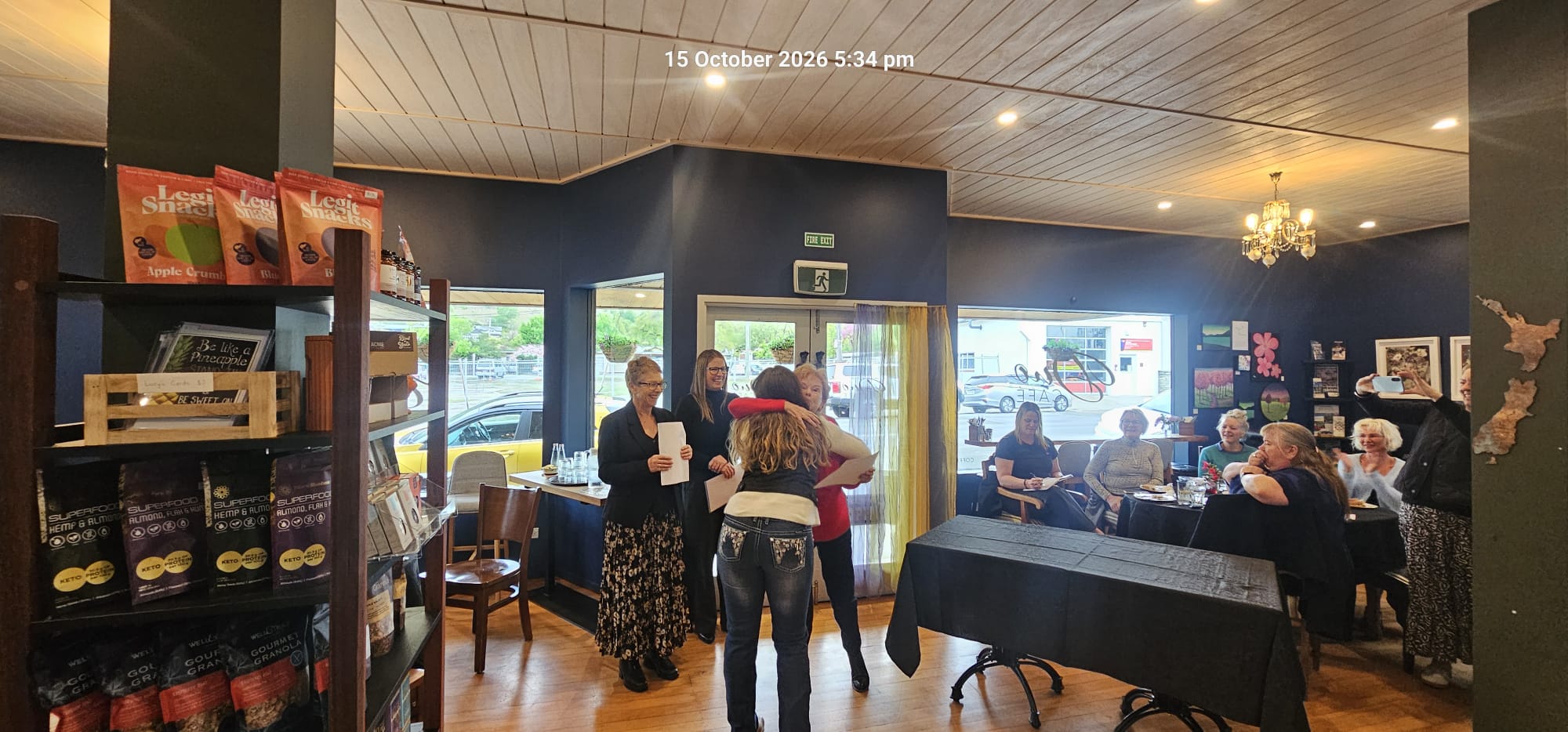
A trip to Clyde to collect a writing prize for Zealanding co-founder Santiago Bonhomme became a larger story about lawyers, words and what can happen when a local business decides to invest in the cultural life of its community.
A NOTE FROM THE EDITORS
Send Zealanding a local story lead, contact, photograph, idea or tip. The best stories often begin with a quiet nudge.