Arts & Culture
·
Story
Auckland, New Zealand
Looking at Picasso Again
Picasso may be one of the most familiar names in modern art. A new Auckland exhibition asks whether, behind the fame, there is still something left that can surprise us.
Santiago Bonhomme

Auckland Art Gallery Toi o Tāmaki, where Picasso: Designed by Paul Smith is showing until 1 February 2027. Photo: Joyofmuseums / Wikimedia Commons, CC BY-SA 4.0.
There are names that arrive before the work. Picasso is one of them. Even someone who has never stood in front of one of his paintings can recognise a split face, a displaced eye, a guitar that has stopped looking like a guitar. For decades we have been taught to look at Picasso before ever encountering Picasso.
That encounter, however, can now happen in Auckland.
Auckland Art Gallery Toi o Tāmaki is presenting Picasso: Designed by Paul Smith, the first solo exhibition of the Spanish artist’s work in Aotearoa New Zealand in more than thirty years. More than eighty works are on display, including 31 paintings, 18 prints, 11 drawings, 10 ceramics and 10 sculptures, most of them from the Musée national Picasso–Paris. The exhibition moves through several decades of a body of work that, seen up close, is far less uniform than its fame allows us to remember.
Picasso did not invent one way of painting. He invented several, exhausted them and often abandoned them while others were still trying to understand them.
In the Blue Period, at the beginning of the twentieth century, colour was not simply an aesthetic decision. It was a moral temperature. Beggars, blind figures, mothers, thin bodies and almost empty rooms seem to exist inside the same cold light. Soon afterwards, the Rose Period softened the palette and filled the paintings with harlequins, acrobats and circus performers, though the loneliness remained. The decisive break came later. Alongside Georges Braque, Picasso fractured traditional perspective and allowed a face, a bottle or a guitar to be seen from several positions at once. Cubism did not distort the world for the sake of distortion. It questioned the idea that there could be only one correct way of looking at it.

Pablo Picasso in Paris, 1904. Photograph by Ricard Canals i Llambí. Public domain / Wikimedia Commons.
That gesture explains much of what followed.
In Auckland we also encounter the later Picasso, the artist who argued with the dead without showing them too much reverence. One of the works in the exhibition is Le Déjeuner sur l’herbe d’après Manet, from 1960. Picasso returned obsessively to Manet’s celebrated painting, producing a cycle between 1959 and 1961 that included 27 paintings, 140 drawings, three linocuts and other works. He was not copying Manet. He was arguing with him. Picasso dismantled the composition, shifted its figures and built it again, as if the history of art were a conversation that had never quite ended.

Pablo Picasso in his Montmartre studio, Paris, 1908. Photograph by Gelett Burgess. Public domain / Wikimedia Commons.
The same restlessness is present in his ceramics. In Picasso’s hands a plate could become a face and a vessel could recover something animal. He never seemed willing to accept the boundary between the so-called major arts and everyday objects. Painting, printmaking, modelling clay or constructing a sculpture were variations on the same problem: what can a form become before it stops being recognisable?
The British designer Sir Paul Smith, known for bringing colour, wit and unexpected detail to traditional tailoring, understood that staging a Picasso exhibition in 2026 brings another problem with it. We have seen him too much.
His images are on mugs, posters, schoolbooks and phone cases. One of the most radical bodies of work of the twentieth century has also become one of the most familiar. Smith therefore did not treat the gallery walls as a neutral background. He worked with colour, pattern, light, texture and unexpected materials to give each part of the exhibition its own atmosphere. The exhibition does not pretend that Picasso arrives free of history. It tries, for a moment, to remove him from the imaginary museum we already carry in our heads.
And then there is the discomfort of the man behind the work. It is difficult now to look at Picasso without thinking about the women in his life, the imbalance of power within many of those relationships and the way some of them were absorbed into his personal mythology. There is no need to choose between absolving him and refusing to look at his paintings. Perhaps looking properly means refusing to ask art to make simple a life that was not.
More than thirty years after his last solo exhibition in New Zealand, Picasso once again has an exhibition to himself at this end of the world.
We do not need another monument to Picasso. He already has enough of those.
What is still worth doing is standing in front of one of his works and finding out whether, behind the surname, there is something left that can surprise us.
Practical guide
Exhibition: Picasso: Designed by Paul Smith
Venue: Auckland Art Gallery Toi o Tāmaki, corner of Wellesley Street East and Kitchener Street, Auckland
Dates: 10 October 2026 – 1 February 2027
Opening hours: Daily, 10am–5pm, except Christmas Day
Tickets: New Zealand adults $30; seniors and Community Services Card holders $27; students $21; children 12 and under free; family pass $85
Information and bookings: Auckland Art Gallery Toi o Tāmaki
Keep the conversation going
This story doesn’t end here.
Read something that stayed with you? Join the discussion, meet the writer behind the story, or help make the next one possible.
Join the discussion on Facebook

Santiago Bonhomme
Santiago Bonhomme is a writer and journalist based in Queenstown, New Zealand. His work explores culture, society, food, identity and the ways people and places shape one another.
Buy the team a coffee
Tag Zealanding on Instagram
Keep Zealanding

Arts & Culture
From Wellington to the World: Pip Adam and the Journey of Audition
Pip Adam’s Audition began in Wellington, crossed the Pacific and has now won the 2026 Ursula K. Le Guin Prize for Fiction.
Arts & Culture
When Lawyers Make Room for Stories
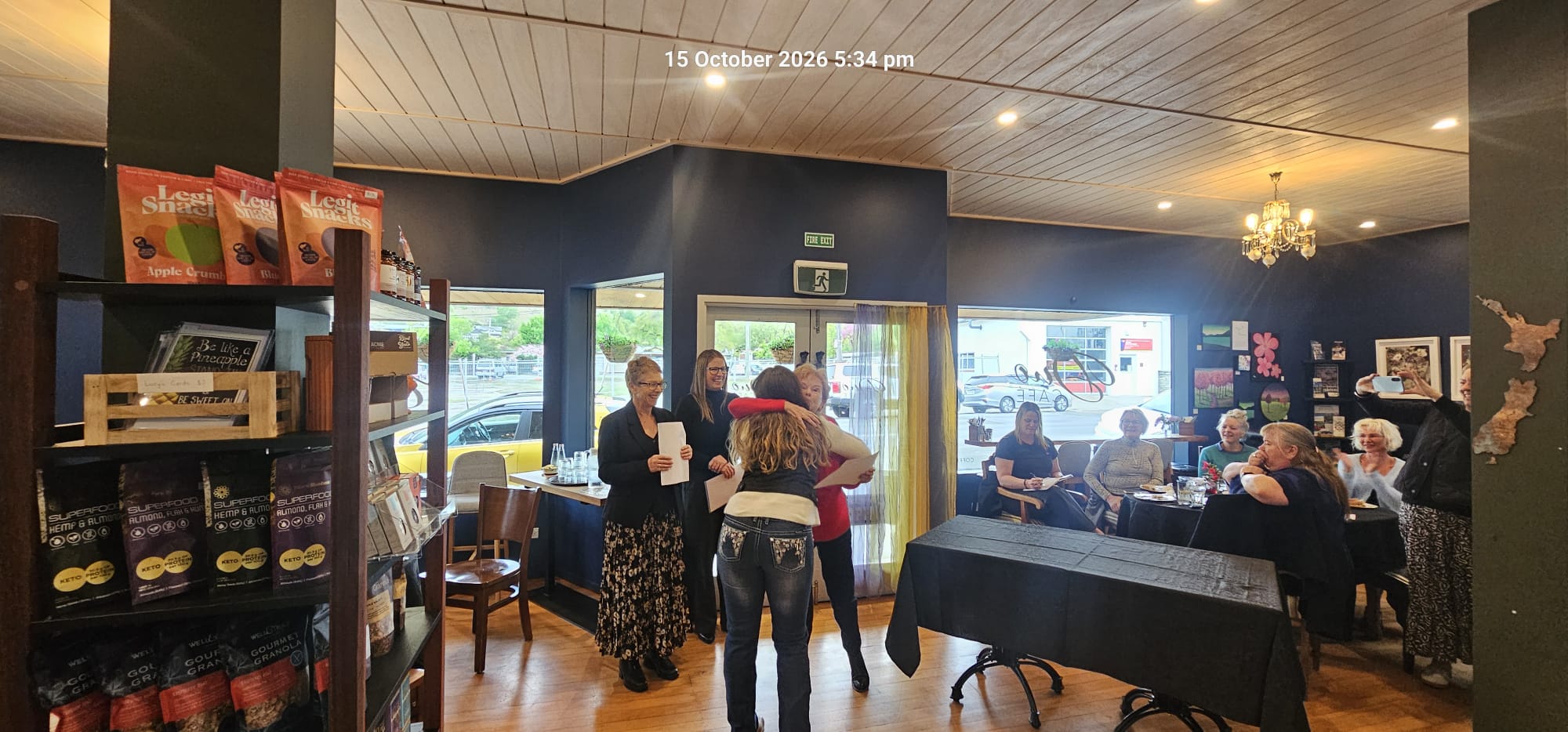
A trip to Clyde to collect a writing prize for Zealanding co-founder Santiago Bonhomme became a larger story about lawyers, words and what can happen when a local business decides to invest in the cultural life of its community.

Arts & Culture
Anne Carson, the Poet Who Refused to Stay Inside Poetry
The 2026 Nobel Prize recognises a writer who has spent decades making ancient literature feel intimate, unstable and completely contemporary.
A NOTE FROM THE EDITORS
Send Zealanding a local story lead, contact, photograph, idea or tip. The best stories often begin with a quiet nudge.