Arts & Culture
·
Story
Wellington, New Zealand
From Wellington to the World: Pip Adam and the Journey of Audition
Pip Adam’s Audition began in Wellington, crossed the Pacific and has now won the 2026 Ursula K. Le Guin Prize for Fiction.
Santiago Bonhomme

Audition begins aboard a spaceship hurtling through the cosmos, where three enormous bodies struggle against confinement, memory and systems of control. Visualization: NASA’s Goddard Space Flight Center / Jeremy Schnittman.
Not every book’s journey begins when it first appears in a bookshop. Some need years, new editions, different readers and even an ocean crossing before they find the place that was waiting for them.
That is what has just happened with Audition, the novel by New Zealand writer Pip Adam, winner of the 2026 Ursula K. Le Guin Prize for Fiction. The annual award carries US$25,000 and recognises a single work of imaginative fiction capable of seeing alternatives to the way we live now.
Audition was first published in New Zealand in 2023 by Te Herenga Waka University Press. In June 2025, Coffee House Press released the novel in the United States. A year later, it was selected from a nine-book shortlist for the Le Guin Prize, giving the book a remarkable second life far beyond the country where it began.
The novel itself starts in a place that is difficult to describe without spoiling what makes it so compelling. A spaceship is hurtling through the cosmos. Inside are Alba, Stanley and Drew, three enormous bodies who can barely fit in the largest room. When they speak, the ship keeps moving. When they fall silent, they begin to grow.
But the science fiction is much more than scenery.
As the three characters talk, memories of imprisonment, violence and disempowerment begin to surface. The novel gradually turns its attention towards a disturbing question: what happens when systems of power decide that certain people take up too much space?

Audition by Pip Adam, first published in Aotearoa in 2023 by Te Herenga Waka University Press. Cover design: Philip Kelly.
The judges praised Audition for its originality, narrative structure and prose, describing it as a novel about the carceral state, dehumanisation, memory and forgiveness. They also highlighted Adam’s ability to make metaphor concrete and to use speculative fiction to alter the way we understand the society around us.
Pip Adam’s own route to literature was far from conventional. Born in Christchurch and raised in Auckland, she left school at 16 and worked as a hairdresser for around fifteen years while moving between work, study and writing. At 23 she attended the New Zealand Film and Television School, later completing a degree in English Literature at the University of Otago. After moving to Wellington, she continued studying and eventually completed both a master’s degree and a PhD in creative writing at the International Institute of Modern Letters.

Te Whanganui-a-Tara Wellington, where Pip Adam lives and writes. Photo: Panamitsu / Wikimedia Commons, CC BY-SA 4.0.
That history matters because Adam’s work has never seemed especially interested in predictable paths.
Her first book, the short-story collection Everything We Hoped For, appeared in 2010 and won the NZSA Hubert Church Best First Book Award for Fiction. It was followed by I’m Working on a Building, The New Animals and Nothing to See. The New Animals won the Acorn Foundation Fiction Prize at the 2018 Ockham New Zealand Book Awards. Adam has also taught creative writing and worked with writing programmes in New Zealand prisons.
The Ursula K. Le Guin Prize feels particularly appropriate for Audition. Le Guin understood speculative fiction not simply as a means of escaping reality, but as a way of looking at it from somewhere else. The prize created in her name seeks work that can imagine alternatives, freedom and grounds for hope.
In her acceptance speech, Adam spoke of living almost as far away as possible from the place where Le Guin wrote, while acknowledging how deeply Le Guin’s writing, thinking and activism had influenced her own life as a writer.
There is something fitting in that distance.
A novel can begin in Wellington, travel quietly for several years, cross the Pacific and suddenly enter a much larger conversation.
Sometimes literature needs time.
And sometimes a book written at this end of the world finds, on the other side of the planet, a conversation that had begun long before the book itself was written.
La conversación continúa
Esta historia no termina aquí.
¿Algo de esta historia se quedó contigo? Únete a la conversación, conoce a quien la escribió o ayúdanos a hacer posible la próxima.
Únete a la conversación en Facebook

Santiago Bonhomme
Santiago Bonhomme is a writer and journalist based in Queenstown, New Zealand. His work explores culture, society, food, identity and the ways people and places shape one another.
Invita un café al equipo
Etiqueta a Zealanding en Instagram
Keep Zealanding

Arts & Culture
Looking at Picasso Again
Picasso may be one of the most familiar names in modern art. A new Auckland exhibition asks whether, behind the fame, there is still something left that can surprise us.
Arts & Culture
When Lawyers Make Room for Stories
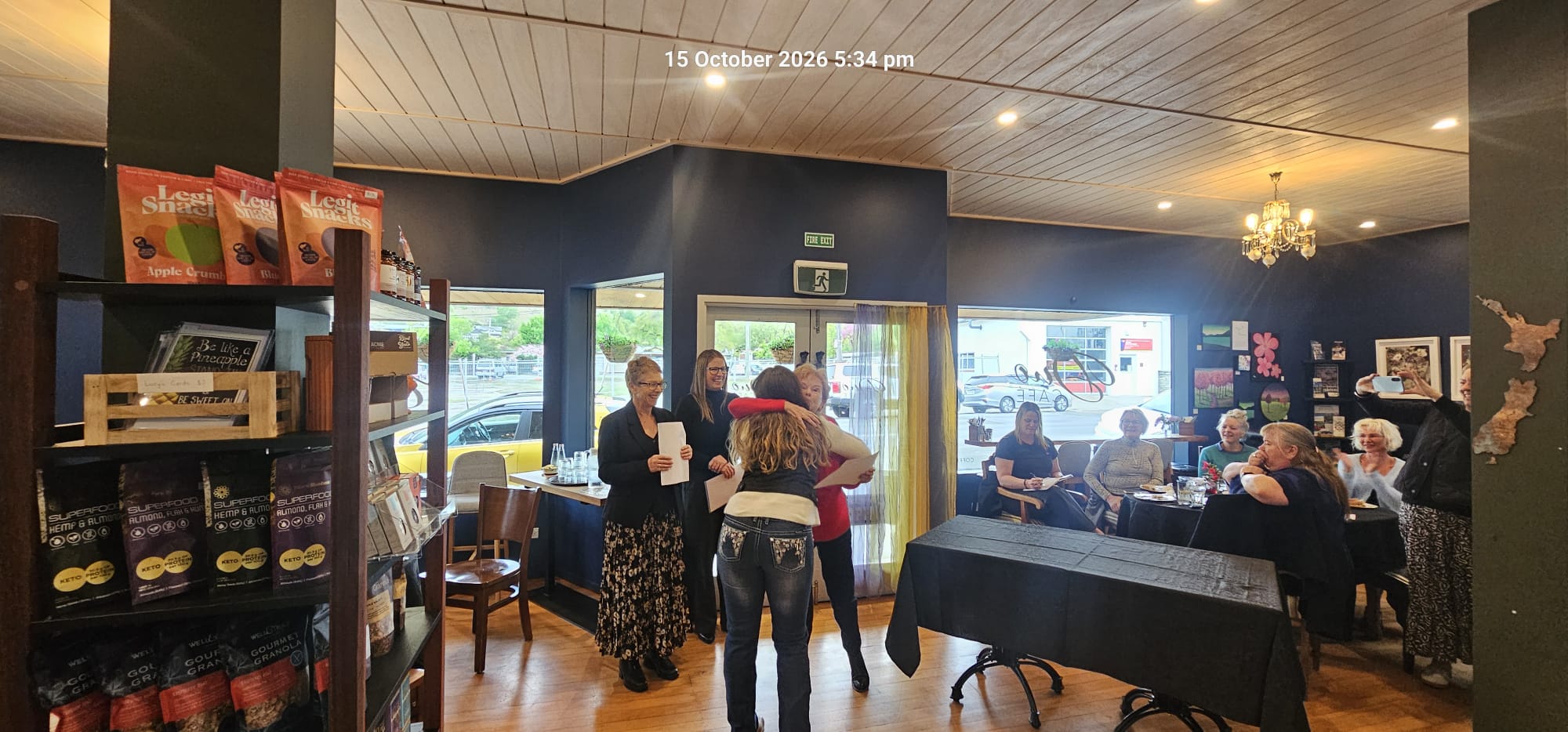
A trip to Clyde to collect a writing prize for Zealanding co-founder Santiago Bonhomme became a larger story about lawyers, words and what can happen when a local business decides to invest in the cultural life of its community.

Arts & Culture
Anne Carson, the Poet Who Refused to Stay Inside Poetry
The 2026 Nobel Prize recognises a writer who has spent decades making ancient literature feel intimate, unstable and completely contemporary.
A NOTE FROM THE EDITORS
Send Zealanding a local story lead, contact, photograph, idea or tip. The best stories often begin with a quiet nudge.