Food
·
Story
Chile
The Geography of Gin
From the foothills of the Andes, Gin Provincia distils Chile not as a map, but as aroma, memory and landscape.
Santiago Bonhomme
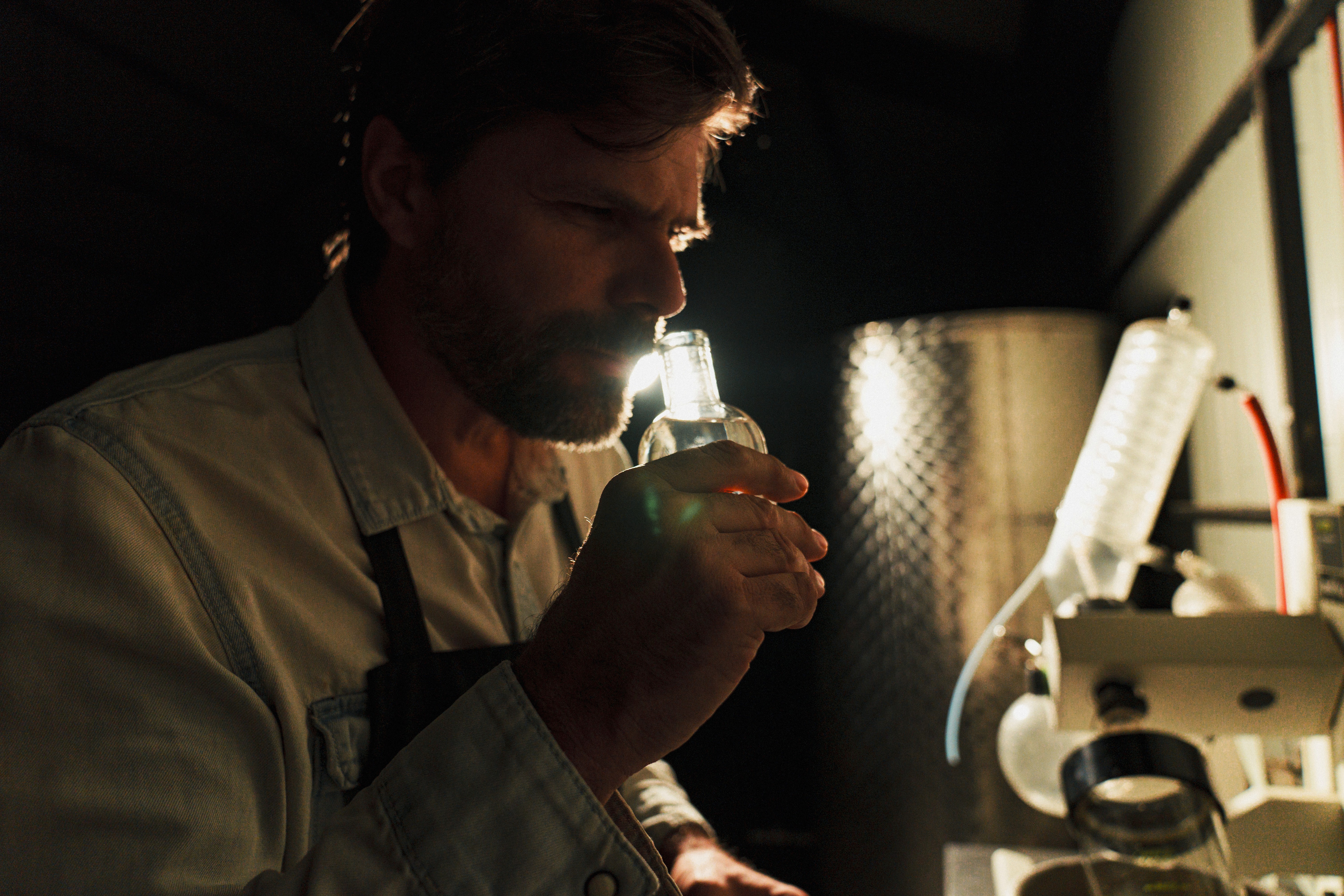
Inside the Gin Provincia distillery, where botanicals, technique and place come together in the still. Photo: Gin Provincia.
During the great gin boom, thousands of new bottles appeared. Some endured. Many disappeared. Yet that expansion left behind something more interesting than another fashion behind the bar. It changed the question.
For a long time, making gin meant working within a tradition whose cultural centre was unmistakably European. Today, some of the category’s most interesting expressions seem to be asking something else. What does the place we live in taste like?
The answers are emerging in different parts of the world. Japan has found new possibilities in its citrus. India has looked to its own spices and plants. Australia and New Zealand have developed a generation of distilleries eager to work more closely with their surroundings, drawing on local water, fruit and botanicals to create spirits with an identity of their own.
In New Zealand, the idea is especially familiar. Long before it reached the still, we learnt to recognise it in wine. Central Otago turned Pinot Noir into a way of speaking about cold, altitude, soil and seasons. Marlborough did something similar with Sauvignon Blanc. A drink could tell the story of a place.
And it is this idea that takes us to the other side of the Pacific.
Gin Provincia is not yet on New Zealand shelves. It is made thousands of kilometres away, in Chile’s Colchagua Valley, at the foot of the Andes. Yet what it is doing belongs to a conversation already taking place here.

The Colchagua Valley in central Chile, the landscape where Gin Provincia was born. Photo: José Porras / Wikimedia Commons, CC BY 3.0.
Provincia has taken gin’s remarkably flexible language and used it to travel through its own country. The Andes, Colchagua, Patagonia and the desert appear not simply as images on a label, but as part of what goes into the bottle.
There is a more personal reason for my interest in this story, too.
I knew Provincia before its bottles began to travel. When I lived in Chile, Gustavo Carvallo and I were neighbours in Colchagua, and I witnessed the early years of a project that was then much smaller than the brand now appearing in competitions, shops and international spirits events.
Looking at Provincia again from New Zealand, several years later and from the other side of the Pacific, is therefore something quite particular. It is not simply a matter of seeing how far a bottle has travelled, but of watching an idea born in one very specific landscape awaken curiosity thousands of kilometres away.
Gin Provincia was founded by Gustavo Carvallo, Cristián Silva and Nicolás Muñoz. Carvallo is also its master distiller.

The team behind Gin Provincia at the distillery in Chile. Photo: Gin Provincia.
The search can be summed up rather simply. Look around. Juniper, boldo, mountain herbs, fruit from the valley and Patagonia. Even the memory of a desert that blooms in certain seasons.
A Liquid Geography

Gin Provincia's expressions move through different Chilean landscapes, from the Andes and Colchagua to Patagonia. Photo: Gin Provincia.
Gin offers an unusual freedom. Juniper gives the spirit its identity, but an almost entire world can be built around it. Roots, bark, seeds, herbs, flowers, fruit and spices can transform what eventually reaches the glass.
Provincia has turned that freedom into a way of travelling through Chile.
Andes Dry is perhaps the clearest starting point. Its recipe combines traditional gin botanicals with ingredients connected to the Andean landscape. Cardamom, coriander and black pepper sit alongside boldo and other plants associated with the mountains. The recipe begins in a familiar language, then gradually changes its accent.
Botánica moves into another landscape. Here is the spring of Colchagua: rosehip, raspberries from Chimbarongo, pink peppercorns from San Fernando, País wine from Paredones, rosemary and oranges from Peumo. Together they make a recipe that reads partly like an agricultural inventory and partly like a memory of the valley.
Patagonia takes the exploration much further south. Ñirre, chaura, paramela, calafate and rhubarb are among the ingredients associated with this expression. Botanicals from a very different landscape return to Alto Colchagua to meet within a single spirit.

Chilean Patagonia. Provincia's southern expression draws on botanicals associated with a radically different landscape from Colchagua. Photo: Jared Schwitzke / Unsplash.
More recently came Desierto Florido. Created in collaboration with Chilean artist Camilo Huinca, it takes its inspiration from the extraordinary phenomenon in which parts of the Atacama Desert briefly come into flower.

The Desierto Florido transforms parts of Chile's Atacama after rare conditions allow dormant plants to bloom. Provincia's expression interprets the phenomenon without taking flowers from the desert itself. Photo: EL GUILLE! / Wikimedia Commons, CC BY 2.0.
But perhaps the most interesting thing is what they chose not to put in the bottle. No flowers were taken from the desert to make it. The idea was to interpret the fragility and beauty of that landscape without disturbing the ecosystem that inspired it.
Seen together, Provincia’s expressions begin to look less like a product range than a cartography of sorts: the Andes, Colchagua, Patagonia and the desert. Each bottle proposes a different geography while returning to the same question. Can a landscape be distilled?
When the World Begins to Take Notice
A good story can make a bottle interesting. It does not necessarily make what is inside it good.
That distinction matters in a market where words such as craft, premium, botanical and local appear so often that they risk losing their meaning. Provincia still had to prove itself in the glass.
In 2020, it was named South America Gin of the Year at the Berlin International Spirits Competition. Two years later, Provincia Patagonia received 97 points and a gold medal at the London Spirits Competition. In 2023, Patagonia also won gold at the World Gin Awards.
Awards have their limits. They cannot reproduce the scent of a freshly cut plant or explain why a particular fruit works with juniper. Nor do they automatically make a spirit memorable.
But they do something important. They place a bottle born at the foot of the Andes on the same table as spirits from markets with far longer histories, where each can be assessed against the same criteria.
From there, Provincia began appearing ever further from Chile.
The Bottles Begin to Travel
France, Italy, the United Kingdom and the United States have become part of an expansion that means more than adding countries to a map. It has meant entering specialist shops, bars and restaurants, and conversations with importers and people in an industry where a good story may open the door, but what is in the bottle decides whether it stays open.
Provincia also joined The Gin Guild, the British association bringing together producers, distillers and professionals involved in international gin culture.
In 2024 came one of the clearest indications of the scale the brand was beginning to achieve. Gin Provincia was selected as Craft Gin Club’s Gin of the Month in the United Kingdom, introducing the Chilean distillery to a club with more than 50,000 subscribers.
The distance from San Fernando to London is more than eleven thousand kilometres. Sometimes international growth is measured not in charts, but in bottles.
The journey continues. Just days ago, Provincia took part in L’Essence du Gin & des Spiritueux, held on 19 and 20 September in Lille, France, adding another stop to a journey that began at the foot of the Andes.
The Luxury of Belonging
For a long time, much of the language of luxury in spirits was associated with age, scarcity, technique, tradition or design. All of that still matters, but there is another kind of value now, too: provenance.
Knowing where a fruit comes from, recognising an herb, working with the seasons and understanding what may be gathered and what is better left untouched. Making something whose identity is difficult to separate from the place where it was born.
Perhaps that is one reason gin remains interesting even as the great boom has begun to settle. Its true legacy was not the endless rows of new bottles. It was giving distillers from very different geographies a reason to look more closely at what surrounded them.
Gin Provincia belongs to that generation. Not because Chile has a monopoly on remarkable botanicals, or because Provincia invented the relationship between place and distillation.
Its appeal is simpler than that. It has chosen to look close to home: a herb growing in the mountains, a raspberry from Chimbarongo, a fruit from Patagonia, a desert that blooms for a few days. From these things it has made something capable of travelling.
Today its bottles have crossed oceans, appeared in international competitions, reached European markets and found their way onto bars thousands of kilometres from the landscape that gave them their character.
New Zealand is not yet part of that geography. I hope one day it will be. After all, in a country that understands so well the relationship between landscape and bottle, it would be fascinating to discover what happens when a small piece of the Andes finally reaches these shores.
Disclosure: The author has known Gin Provincia co-founder Gustavo Carvallo since living in Chile, as described in this article. Zealanding received no payment or commercial consideration for this story.
La conversación continúa
Esta historia no termina aquí.
¿Algo de esta historia se quedó contigo? Únete a la conversación, conoce a quien la escribió o ayúdanos a hacer posible la próxima.
Únete a la conversación en Facebook

Santiago Bonhomme
Santiago Bonhomme is a writer and journalist based in Queenstown, New Zealand. His work explores culture, society, food, identity and the ways people and places shape one another.
Invita un café al equipo
Etiqueta a Zealanding en Instagram
Keep Zealanding
A NOTE FROM THE EDITORS
Send Zealanding a local story lead, contact, photograph, idea or tip. The best stories often begin with a quiet nudge.