Society
·
Opinion
New Zealand
New Zealand Is Still Reading - And I Hope We Keep It That Way
I read from my phone now, but I still remember what it felt like to disappear into Kundera, García Márquez or Tolkien with a book in my hands. New Zealand has just ranked ninth in the world for reading. In a world learning to scroll faster, that feels worth celebrating.
Cesar Carvajal
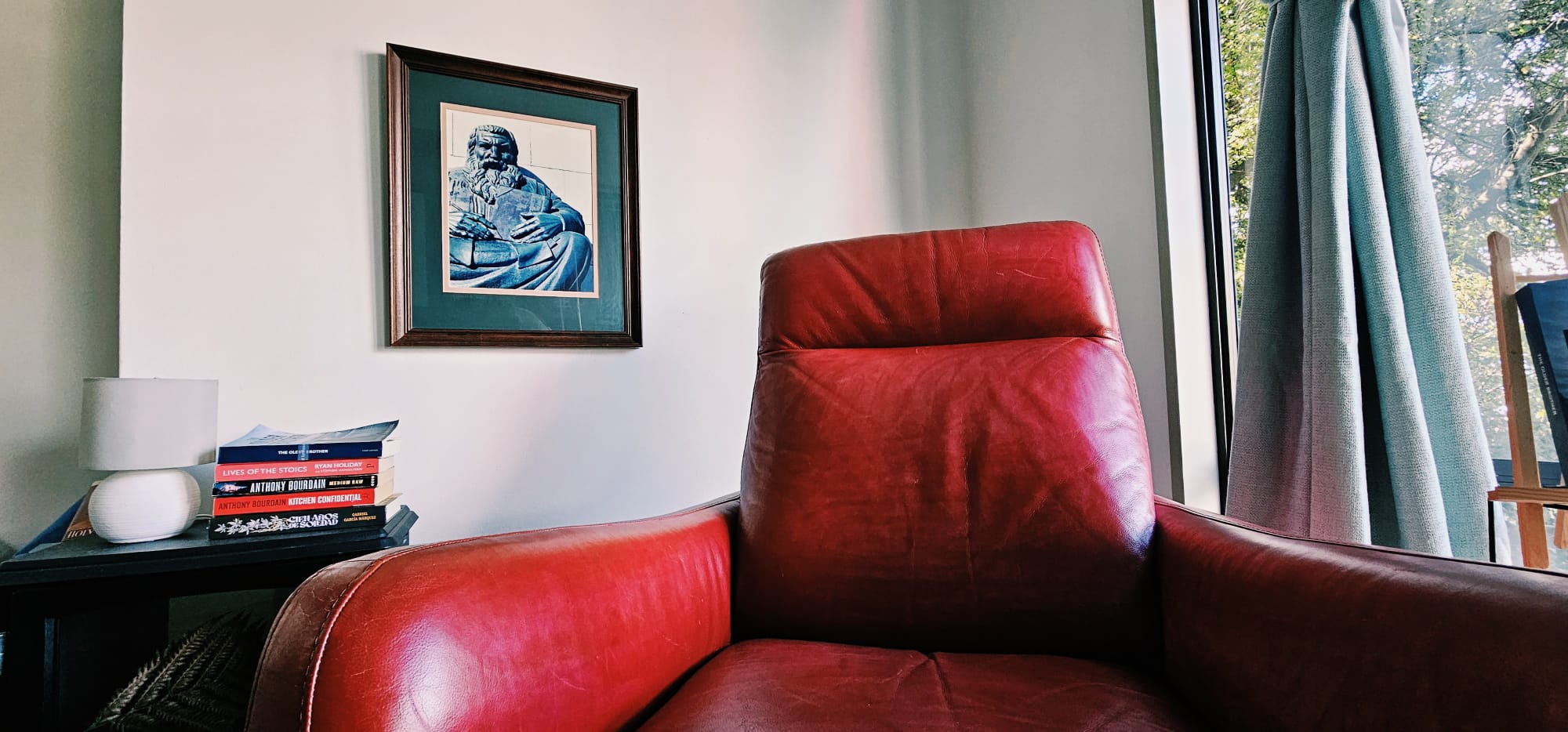
I read a lot from my phone now.
Articles, essays, news, messages, research, sometimes even long pieces that I save and come back to later. I am, at least part of the time, a digital reader, and I don’t have a problem admitting that. This is the world we live in.
But I also remember the years when reading meant having a physical book in my hands, and those memories feel completely different. Kundera, Hemingway, García Márquez, J.R.R. Tolkien. I remember entering those worlds through paper, carrying the book somewhere, leaving it beside the bed, returning to the same folded corner or bookmark, sometimes reading the same paragraph twice because something in it had stopped me. There was an experience around the book itself that I would never exchange completely for the digital version.
That thought came back to me this week because of the latest PISA results. New Zealand ranked ninth in reading among the education systems participating in PISA 2025, with an average score of 497, well above the OECD average of 461. Around 77 percent of New Zealand students reached at least the basic level of reading proficiency, compared with 69 percent across OECD countries, while 14 percent were among the highest-performing readers, more than twice the OECD average.
I liked seeing New Zealand there.
Not because the result means everything is perfect. It doesn’t. New Zealand’s reading score was broadly stable compared with 2022 and is still below some earlier results. There are important gaps between stronger and weaker readers, and those deserve attention. But when we look at what is happening across the rest of the developed world, the result starts to feel more significant.
Across OECD countries, average reading performance has fallen considerably. Since 2015, the decline is around 28 points, which the OECD estimates is roughly equivalent to a year and a half of learning. Reading has fallen more sharply than mathematics or science, and the trend began before COVID. Something was already changing in the way young people were interacting with words, stories and information.
That part interests me because we live in a strange moment. Reading is everywhere and at the same time it feels like reading is disappearing. We wake up and check the phone. We read WhatsApp, Instagram captions, comments, emails, headlines, Google results, AI responses, restaurant reviews, messages from family, work conversations. We probably process thousands of words every day. So it would be unfair to say people simply do not read anymore.
But there is another kind of reading that feels more fragile.
The kind where you stay.
Where there is no notification pulling you somewhere else.
Where a writer has twenty pages to build an idea and you give those twenty pages a chance.
Where you read something and do nothing immediately afterwards.
You just sit there with it.
The OECD has been looking at this too. One of the more interesting ideas in its recent research is the growth of what it calls “hasty readers” — students who move quickly through texts but do not necessarily understand them accurately. Their numbers have increased significantly. When I read that, it felt familiar. It sounds a little like the rhythm we have all been trained into: headline, first paragraph, reaction, scroll, next thing.
I don’t want to turn this into another discussion about attention spans, phones or whether technology is destroying us. That conversation exists already and is much bigger than this article. I am more interested in the other side of it: what happens to us when we keep reading anyway?
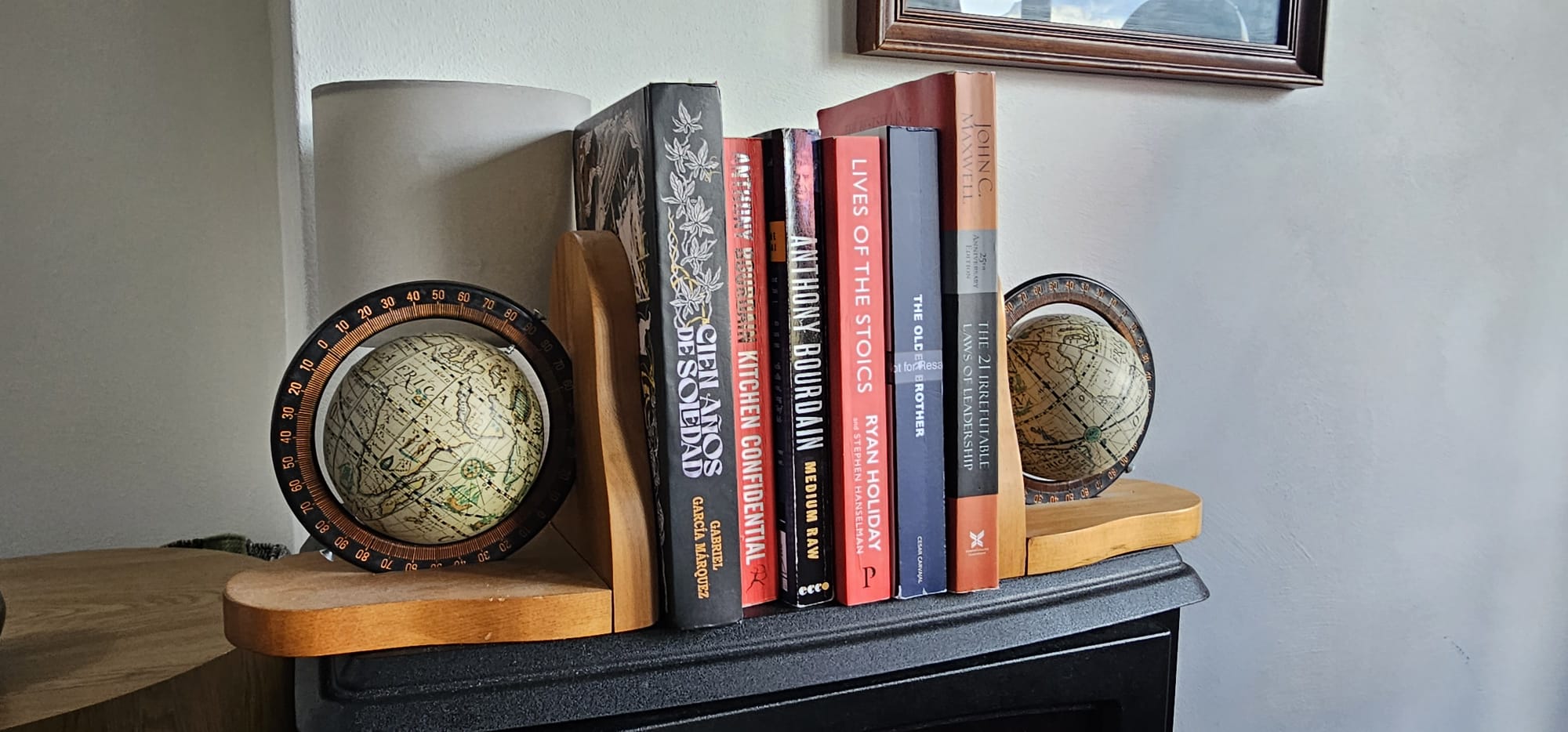
At Zealanding, we love to read and we love to write. Since we started publishing more regularly, one thing has surprised and encouraged us: people are reading. People arrive at an article, stay with it, send us a message afterwards, disagree with something, criticise it, tell us where they think we are wrong, connect it with their own experiences or add something we had not considered.
I really like that about New Zealand.
There seems to be a genuine appetite here for having an opinion, questioning something, arguing about an idea and joining a conversation. Not always politely, of course - this is still the internet - but the willingness is there. People read, people think, people answer back.
And that is part of what reading can do for a society.
It gives us more material to think with, more language skills for things we had felt but could not explain, and even the chance to encounter an argument before deciding whether we agree with it..
It lets us enter lives that have nothing to do with our own.
A good book can change the quality of a conversation. A good essay can leave a question moving around in your head for days. Literature can do something even stranger. Sometimes a sentence reaches your bones before your brain has finished explaining why it matters. A scene reaches your belly. A character stays with you. An image appears years later in your memory without asking permission.
Anyone who loves books knows that feeling.
I still remember the sensation of reading García Márquez and feeling that reality had become slightly more elastic. Hemingway could make a sentence feel almost physically clean. Tolkien could make an invented world feel older than the real one. Kundera could make you stop halfway through a page because suddenly you were no longer reading about his characters; you were thinking about yourself.
That is difficult to reproduce while scrolling.
It is not impossible to experience digitally. I have read wonderful things on a screen. I have discovered writers through social media that I might never have found otherwise. Sometimes Facebook, Instagram or a random link has led me into an essay that stayed with me for weeks. I don’t think paper has a monopoly on meaningful reading.
The phone can also be a door.
The question is where we go after opening it.
If social media is where most of us now meet, then maybe it can also be where someone says: I read something interesting today. Maybe we click through. Maybe we stay. Maybe one paragraph becomes ten. Maybe an Instagram post sends somebody to an article, and that article sends somebody to a book.
I like thinking about Zealanding in that way.
A kind of digital café.
Somewhere we come to read, write, express ourselves, disagree a little, discover something, and stay longer than we originally planned.
I hope you are starting to feel that too.
I am writing this on a Sunday morning with an English breakfast beside me. I already had a coffee earlier, so I probably don’t need another one, although writing has a way of creating excuses. The morning is quiet and the conversation, at least from this side of the table, feels good.
A friend once told me that good conversations make the coffee last longer.
I have always liked that.
There is something I like in that image. Nobody is checking how quickly the coffee disappears. Nobody is trying to optimise the meeting. You are talking, listening, thinking, and then suddenly you notice the cup has been sitting there for what feels like a hundred sips.
Books can do something similar.
You open one and time changes slightly.
You look up and the room is darker.
Your tea has gone cold.
Your coffee has somehow survived much longer than expected.
New Zealand’s PISA result made me think about all of this because, while much of the developed world appears to be struggling with reading, New Zealand remains among the strongest performers. That tells us something good about the country.
It is worth celebrating.
It is also worth protecting.
Reading does not live only inside schools. It lives in homes, libraries, cafés, bookshops, newspapers, magazines and websites. It lives in the person reading a paperback on the bus. It lives in somebody reading a long article on a phone while waiting at the airport. It lives in parents reading to children. It lives in the book sitting open beside the bed.
And it lives in conversations afterwards.
We cannot stop the world from changing, and I am not sure we would want to. I am writing this for a digital publication and you are probably reading it on a screen. That is fine with me.
But there are some things worth carrying with us.
Reading is one of them.
It improves the quality of our thoughts, the way we communicate, the conversations we are able to have and the amount of the world we are able to imagine. And sometimes, without any practical purpose at all, it simply nourishes something deeper inside us.
So today, we are celebrating that New Zealand is still there, among the world’s strongest reading countries.
And from our little digital café, we hope to contribute in our own way.
Keep reading.
Keep writing.
Keep disagreeing.
Keep recommending books.
And if I find you one day sitting somewhere with a book open and a cup of tea or coffee that has somehow lasted for around a hundred sips, I will assume the conversation is good.
Data source: OECD, PISA 2025 Results and New Zealand country results, released September 2026.
La conversación continúa
Esta historia no termina aquí.
¿Algo de esta historia se quedó contigo? Únete a la conversación, conoce a quien la escribió o ayúdanos a hacer posible la próxima.
Únete a la conversación en Facebook

Cesar Carvajal
Cesar Carvajal is a Colombian-born writer and editor based in Queenstown. A former lawyer and chef, he writes about society, culture, migration and the everyday experiences that shape life in New Zealand.
Invita un café al equipo
Etiqueta a Zealanding en Instagram
Keep Zealanding

Society
What If We Woke Up Without Them?
A campaign slogan, two policy proposals and an old film raise a larger question: when does someone who came to New Zealand simply become part of New Zealand?

Society
NZ First Wants a Ten-Year Wait for Citizenship. But What Would It Take to Become Law?
New Zealand First wants to double the qualifying period for citizenship from five to ten years. But it does not need to win the election for the proposal to matter. Under MMP, the real question may be how much bargaining power the party holds after 7 November.
A NOTE FROM THE EDITORS
Send Zealanding a local story lead, contact, photograph, idea or tip. The best stories often begin with a quiet nudge.